

Preparing for Your SSI Instructor Course: What to Practise Before You Arrive
Booking your SSI Instructor Training Course is an exciting step. Before long, you will be learning how to explain diving concepts, demonstrate skills and help other people become confident divers.
A little preparation before you arrive makes that learning process easier. You do not need to arrive as a finished instructor, but refreshing your knowledge and diving skills gives you more time to concentrate on learning how to teach.

Start with an Honest Look at Your Diving
Every instructor candidate arrives with different strengths. You may be comfortable guiding divers but feel less confident with dive physics. You might enjoy theory yet need more practice demonstrating skills slowly and clearly.
Identifying those areas before your ITC gives you something useful to work on. Tell your Instructor Trainer what feels comfortable and where you would appreciate support.
At Oceans 5 Gili Air, our instructor training combines practical teaching exercises, individual feedback and an emphasis on responsible diving. Preparation helps you get more from each part of the course.
1. Refresh Your Diving Theory
During instructor training, you will develop your ability to explain diving knowledge to students. That is easier when the underlying concepts are already familiar.
Review your previous training materials and make a list of topics you find difficult. Concentrate on understanding the reasons behind an answer rather than memorising it.
Physics and Physiology
Revisit pressure, volume, buoyancy, breathing gases and how diving affects the body. Practise explaining a concept in simple language without losing its meaning.
Equipment and Dive Planning
Refresh your understanding of equipment functions, computer use, gas planning and the limits that apply to the dives you conduct.
2. Make Buoyancy and Trim a Priority
An instructor needs enough control to demonstrate a skill while remaining aware of students and the surrounding environment. Good buoyancy gives you more attention to use for teaching.
During suitable practice dives, work on maintaining a stable position, making small adjustments and moving without disturbing the bottom. Notice whether using equipment or communicating causes you to change depth.
- Check your weighting with guidance from a dive professional.
- Practise hovering without unnecessary hand or fin movement.
- Work on controlled ascents, descents and stops.
- Keep equipment secure and easy to reach.
- Maintain awareness of your buddy while completing simple tasks.
At Oceans 5, ocean skills are taught neutrally buoyant. Developing stable buoyancy before your ITC helps you prepare for this approach and set a responsible example for future students.
If you want focused work on control, equipment configuration and team awareness, you can also explore the training options at Oceans 5 Dive Tech. Technical training is an optional way to develop skills, rather than a requirement for joining the ITC.
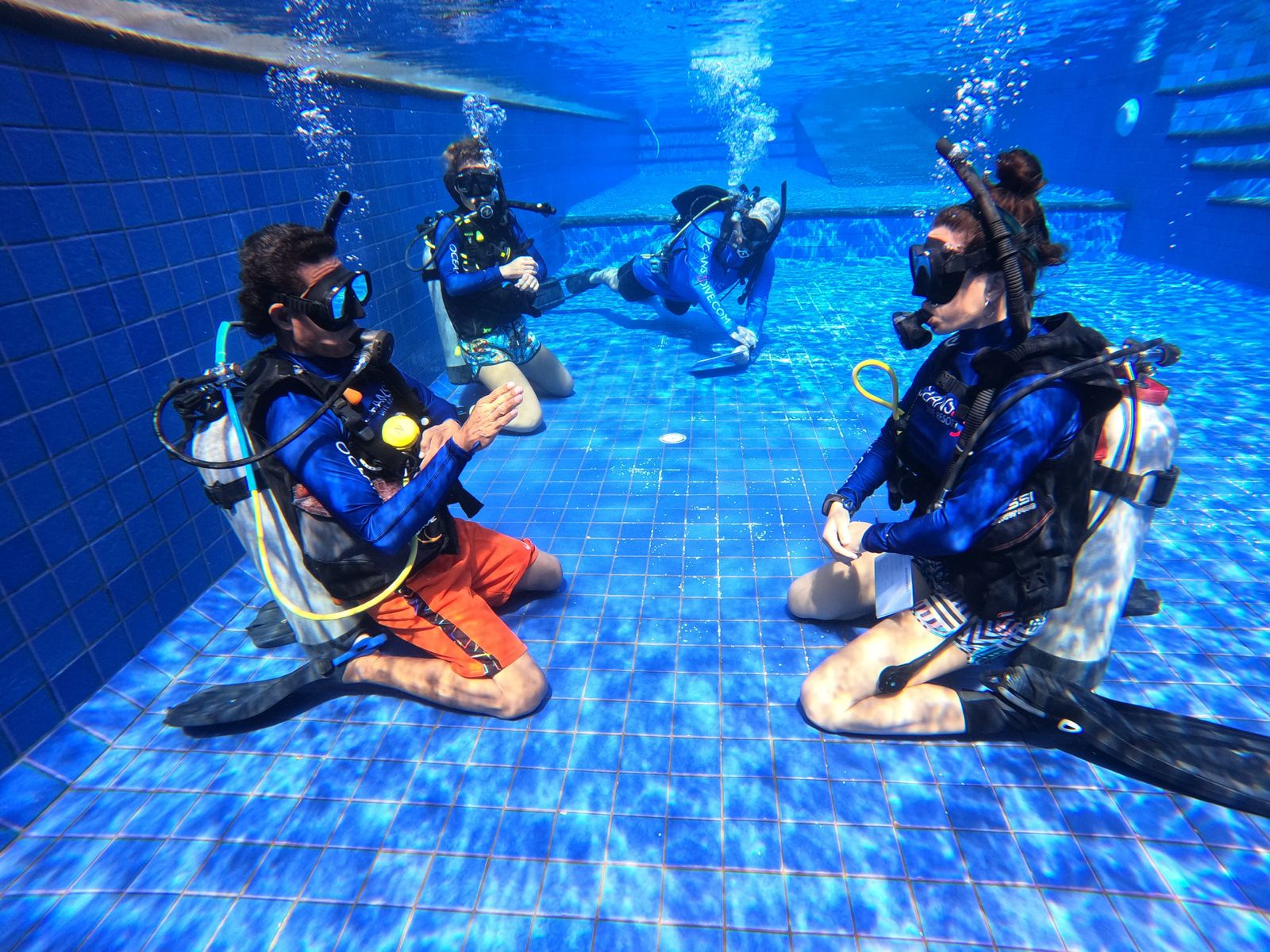
3. Practise Clear, Controlled Skills
Being able to perform a diving skill and being able to demonstrate it clearly are different abilities.
A student needs to see what you are doing and understand the important steps. Before your ITC, refresh familiar skills with a qualified professional and ask for feedback on your control and clarity.
Depending on your training needs, this could include mask skills, regulator recovery, alternate-air-source procedures and equipment handling. Your Instructor Trainer will guide you on the demonstration techniques used during the course.
4. Refresh Your Rescue Awareness
Rescue knowledge is part of your foundation as a dive professional. Review your previous training and think about how you recognise difficulties before they develop into emergencies.
Discuss areas that feel rusty with your trainer. Supervised practice can help refresh your response, communication and teamwork.
- Recognising signs of stress before and during a dive.
- Communicating clearly when someone needs assistance.
- Understanding emergency plans and available equipment.
- Keeping your first aid and oxygen-provider training current.
Check the validity of your qualifications and confirm any renewal needs with the team before travelling.
5. Understand the SSI Training Pathway
Moving from Divemaster to instructor means taking on a different responsibility. You will be learning to organise training, explain new information, assess progress and help students overcome difficulties.
Familiarise yourself with the structure of the SSI Instructor Training Course and how the Instructor Evaluation fits into your training plan. Ask the team to confirm your entry requirements, documents and preparation tasks before you book.
Candidates with qualifications from another recognised training agency are welcome to discuss their pathway with Oceans 5. Send us your certification details and logged experience so we can check the appropriate next steps.
If you are still working towards your first professional qualification, visit our Divemaster internship website to explore that stage of your development.

6. Organise Your Materials, Documents and Equipment
Leaving preparation until the first morning creates unnecessary pressure. Contact the team early for your current document checklist and instructions for accessing your SSI materials.
Learning and Documents
- Certification records and logged diving experience.
- First aid and oxygen-provider records.
- The required medical documentation.
- Access to assigned digital learning materials.
- A list of questions for your Instructor Trainer.
Equipment and Travel
- Check personal equipment before departure.
- Know how to operate your dive computer.
- Confirm any rental equipment you need.
- Arrange accommodation and transfers.
- Check insurance cover for your planned training.
Review our instructor course prices so you understand the training fee, additional SSI and evaluation fees, and the costs you need to budget for separately.
7. Give Yourself Time to Settle In
Arriving after a long journey and starting instructor training immediately can make the first few days harder than necessary. If your schedule allows, reach Gili Air early enough to rest, organise your equipment and become familiar with the dive centre.
Oceans 5 currently includes one week of free diving before the ITC in its instructor training package. Arrange this with the team in advance and confirm the details when booking.
Use those dives to regain comfort in the water, check your equipment and identify questions for your trainer. If you need a refresher or specific coaching, discuss that beforehand so it can be planned.
You can explore diving and accommodation at Oceans 5 Gili Air.
8. Arrive Ready to Learn from Feedback
Your first teaching presentation will probably have things to improve. That is an expected part of instructor training.
You might need to shorten an explanation, change your position in the water or give students clearer instructions. Progress comes from understanding the feedback and applying it during your next attempt.
Practise listening without immediately defending your original approach. Ask what the trainer observed, why it matters and what a useful improvement would look like.
Our small-group instructor training gives candidates opportunities to discuss their progress and learn from one another.
Bring Environmental Awareness into Your Preparation
Students learn from your behaviour as well as your explanations. How you control your buoyancy, approach marine life and secure your equipment will influence the habits they develop.
Before your ITC, pay attention to the example you set on every dive. Avoid contact with the reef, give animals space and consider how your positioning affects the divers around you.
Visit the Marine Conservation Society website to learn more about conservation and environmental issues around the Gili Islands.
Your Pre-ITC Checklist
- Confirm your eligibility and documents with Oceans 5.
- Review diving theory and note unfamiliar topics.
- Refresh buoyancy, trim and familiar diving skills.
- Arrange supervised rescue practice if needed.
- Check first aid, oxygen training and medical requirements.
- Access your assigned SSI learning materials.
- Check equipment and confirm rental arrangements.
- Plan accommodation, travel and preparation time.
- Tell your trainer where you would appreciate extra support.
You do not need to feel confident about everything before starting. Arriving prepared means knowing your current abilities, taking care of practical details and being ready to learn.
Frequently Asked Questions
Do I need perfect skills before starting my SSI ITC?
You should arrive with the diving competence expected of your professional qualification. The ITC develops your teaching ability and demonstration techniques. If particular skills feel rusty, tell the team early so preparation can be discussed.
Can I join with a Divemaster qualification from another agency?
Contact Oceans 5 with your certification records and diving experience. The team can review your qualifications and confirm the applicable SSI entry requirements.
What should I study before arriving?
Review dive physics, physiology, equipment, dive planning and your previous professional training. Follow the team’s instructions for assigned SSI digital learning.
Can I arrive early to dive before the course?
Yes. Discuss your arrival date with the team. The current ITC package includes one week of free diving before the course; confirm the arrangements and any additional preparation you need when booking.
Where can I find course dates and the full costs?
See our SSI ITC dates and instructor course prices . Contact us to confirm availability and your individual preparation plan.
Prepare for Your SSI Instructor Course at Oceans 5
Thinking about becoming an SSI Instructor on Gili Air? Tell us your certification level, logged experience and preferred course dates.
We can help you check your next steps and identify what to prepare before arriving.